PREVIEW Runnerly turns self-hosted GitHub runners into an operations console
Runnerly private preview

Self-hosted runners, without guesswork.

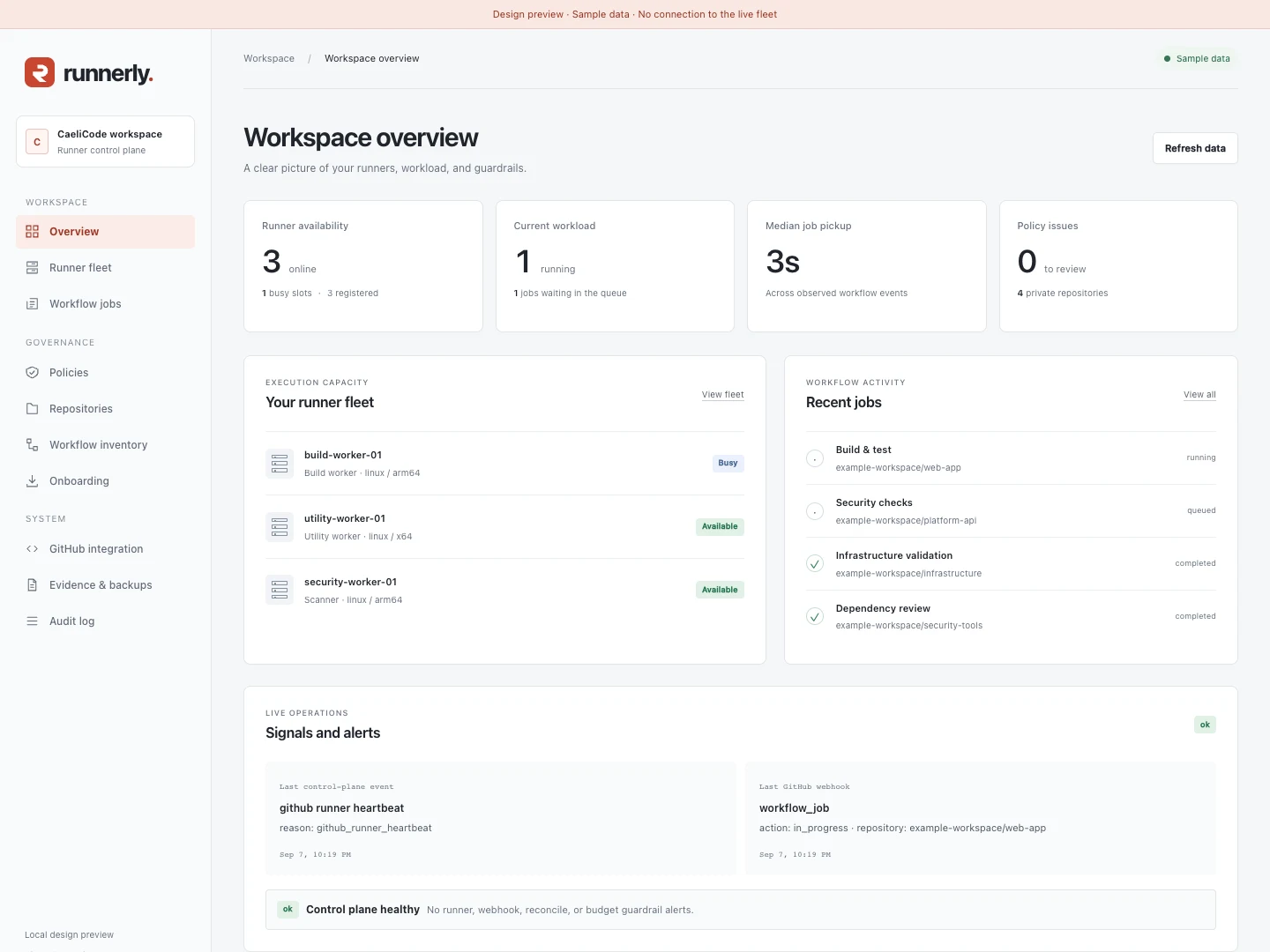
Runnerly gives engineering teams one control room for runner readiness, repository coverage, enrollment, and CI job evidence.

What it is

A control plane for the runner layer GitHub does not manage for you.

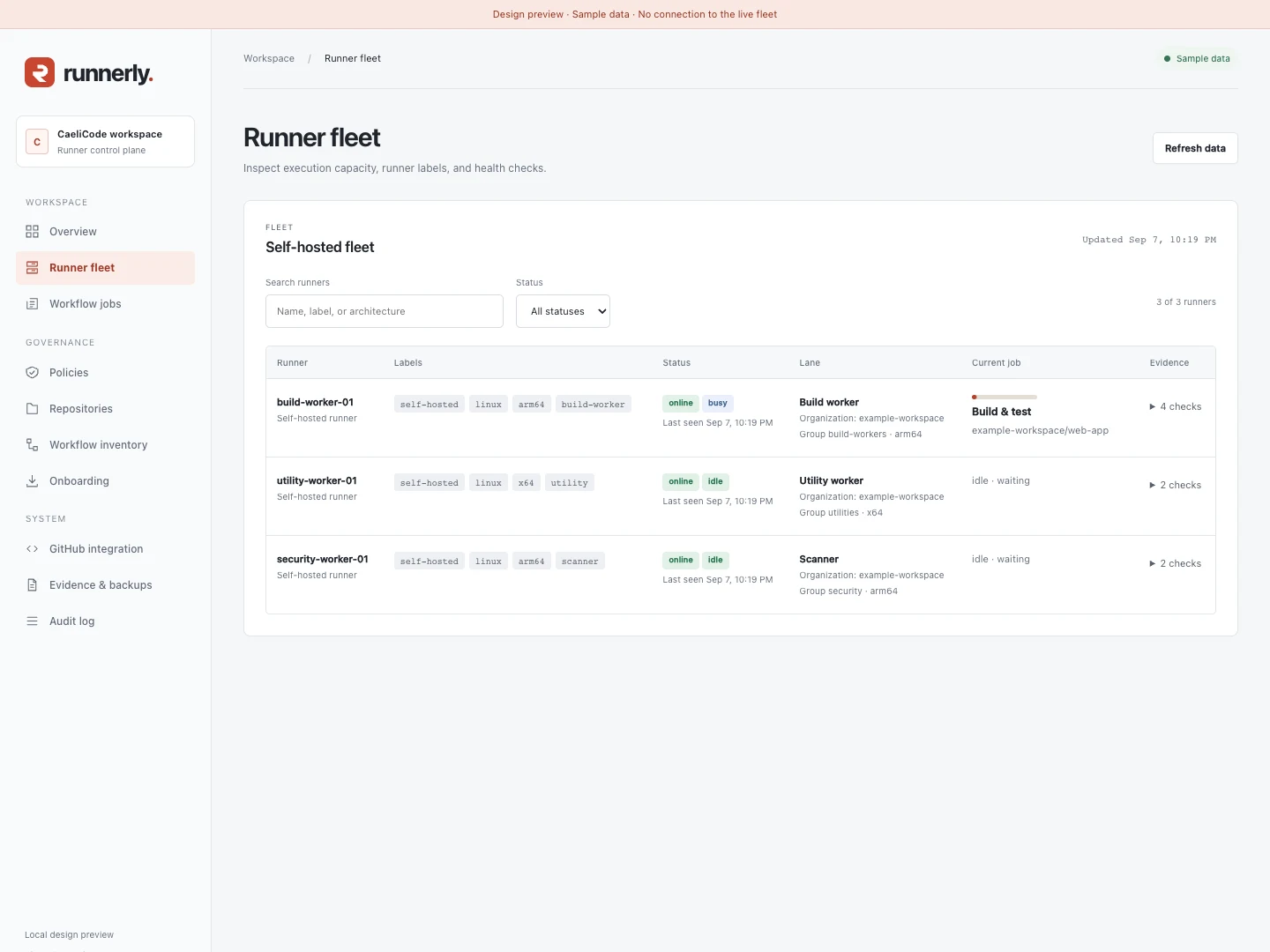
Runnerly sits beside GitHub Actions and turns self-hosted runners into an observable, governed fleet instead of a set of machines people hope are still alive.

01

Fleet readiness

Tracks heartbeats, labels, architecture, status, runner scope, and recent checks from managed agents and GitHub events.

02

Repository policy

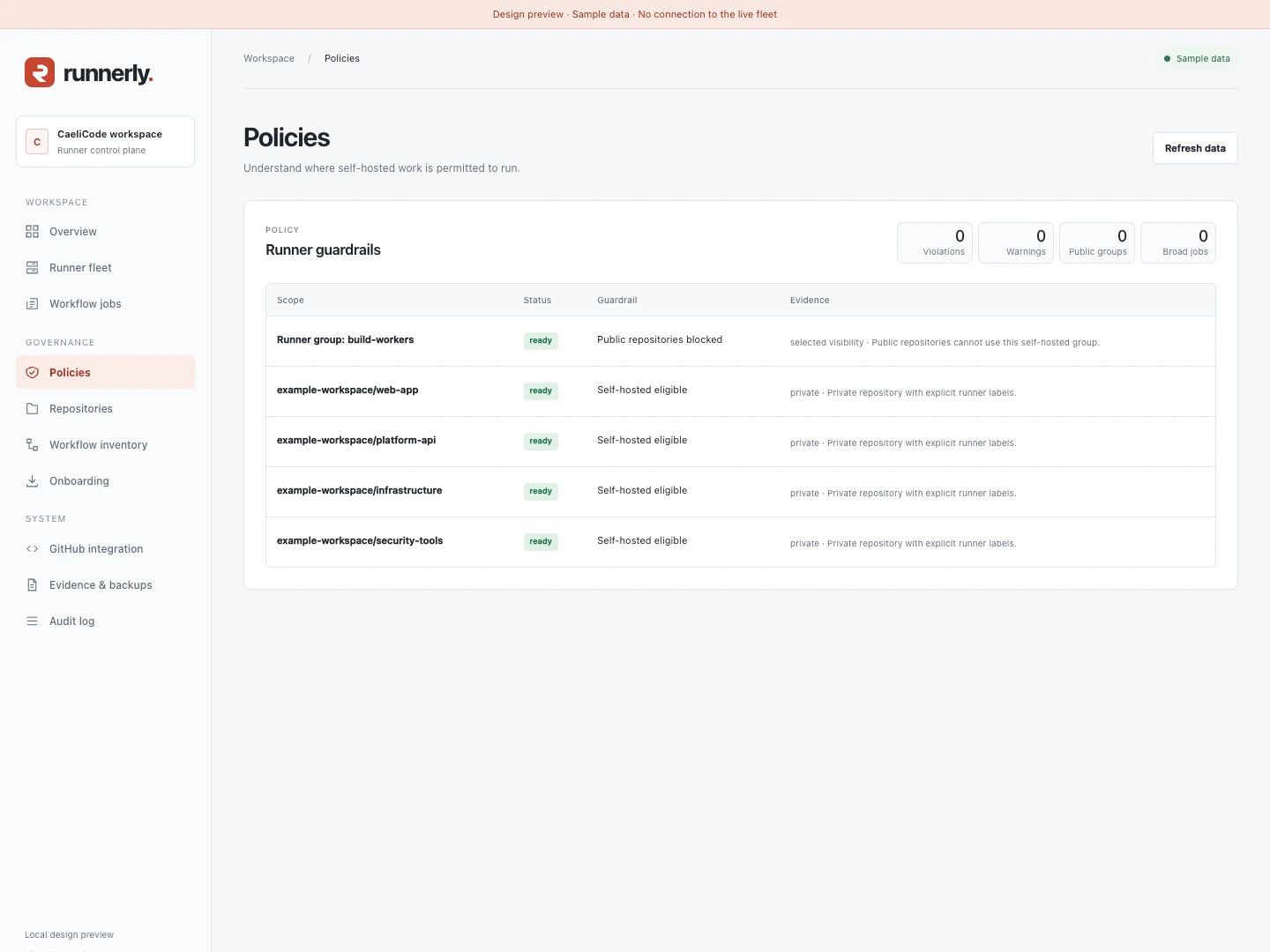
Shows which repositories are allowed, which labels they require, and whether an online runner can satisfy them.

03

Tokenized enrollment

Mints short-lived registration tokens through a GitHub App so runner setup does not depend on long-lived personal access tokens.

04

Job evidence

Links workflow jobs back to repositories, runner labels, webhook delivery, and operator events for later review.

Architecture

GitHub schedules the work. Runnerly owns the runner boundary.

The control plane receives workflow events, keeps a local system of record, coordinates runner agents through authenticated API calls, and gives operators a private dashboard for readiness and audit trails.

GitHub Actions Webhook intake Runnerly control plane Policy store Ops dashboard Runner agents
Guardrails

Useful now, honest about what comes next.

Runnerly is a private-preview operations product. It is built to make runner ownership clearer before it expands into a broader platform.

Current fitPrivate labs, repository onboarding, ARM64 runner visibility, workflow-job evidence, and operator runbooks.
Next fitHardened identity, safer enrollment, richer runner lifecycle checks, and cleaner external access paths.
Not yetMulti-tenant SaaS, billing, public dashboard exposure, or compliance certification claims.
Private preview

Bring discipline to the runners already carrying your CI.

Start with one repository and one self-hosted runner, prove the operating model, then decide how far Runnerly should go.